What is glass skin?
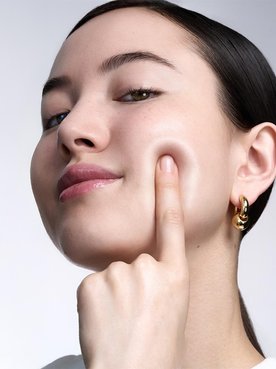
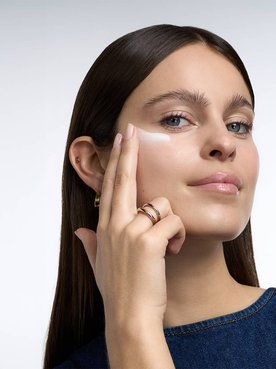
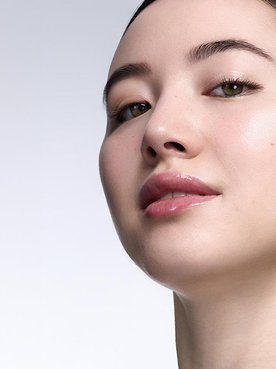
“Glass skin” is a clear, smooth, intensely hydrated complexion that looks dewy, luminous, and almost reflective, rather than matte or airbrushed. The core concept is that visible glow comes from a healthy, well-supported skin barrier and consistent hydration.
Instead of covering texture and unevenness with heavy makeup or relying on procedures, glass skin focuses on skincare habits that help skin look plump, calm, and radiant so makeup becomes optional or minimal. “We’re seeing this huge desire for skin not to necessarily ‘look more beautiful,’ but to really have skin be healthier,” said Alicia Yoon – one of the early pioneers of the glass skin trend – in a 2021 interview.
This illustrates one of the reasons the glass skin trend has been so enduring. Trends come and go, but healthy skin is beautiful skin, meaning that trends rooted in health and self-care are more likely to last than fads that deviate away from the fundamentals of skin health and natural-looking beauty.
The science of glass skin
We understand the glass skin goals, but what does this mean for skin at a scientific level?
The cornerstone of glass skin is hydration. Deep inside the skin the water levels are very high at ~80%, but as we get closer to the surface of the skin the hydration levels steadily fall until we reach the skin surface, which only has a water content of 20%. At the deeper levels the water is held by long molecules called glycosaminoglycans (GAGs), which include hyaluronic acid. These molecules hold on as much water as they can, helping to give the skin structure, bounce and plumpness. In the upper layers, the water is more held by the skin cells, and as these skin cells grow to the surface they start to die and lose their water, which is why the skin surface has much lower water content.
This top layer of skin, called the stratum corneum, may not have much water itself, but is critical for skin hydration. It acts as a barrier between the inside of the skin and the outside world, helping to trap hydration inside, and keep external aggressors out.
The diffusion and evaporation of moisture across this barrier, called transepidermal water loss (TEWL), increases in dry and damaged skin, which exacerbates moisture loss. This makes the skin more vulnerable to irritants getting inside the skin, promoting even more skin damage. Healthy skin already loses 100 to 150ml per m2 of skin per day, so this is a major route of water loss.
Skin hydration levels gradually decline with age, but there is more to the story. There is a strong correlation between wrinkle severity and skin hydration across all ages, highlighting the importance of hydration for everyone. In well-hydrated skin, light hits the skin and evenly reflects back, in the same way something smooth appears shiny because the light is reflected evenly. In dehydrated skin, the light doesn’t reflect evenly and scatters, the same way an object with a rough surface appears dull.
Dehydrated skin therefore promotes skin dullness and decreases glow, the very opposite of glass skin. Published research by L’Oreal looking at 1,058 women across 6 countries found that irrespective of skin tone or ethnic background, people with skin that has lower glow or radiance were perceived as older.
The skin’s primary source of hydration comes from within, which is the water we drink or the foods we consume. There is a possible link between dietary water intake and skin hydration, with research suggesting that increasing daily water consumption improves skin moisture levels, and the increase is most pronounced for people whose daily water intake was previously low. So, drink up to maximise your skin hydration baseline, but this will only help to a degree. To optimise our glass skin game we’ll need some external help.
Key ingredients for glass skin
Cosmetic ingredient approaches to improve hydration will be focused on three areas; hydrating the skin surface, getting hydration deep into the skin, and improving the skin barrier function so the skin can lock in that hydration by itself.
The best ingredients for glass skin include:
- Hyaluronic acid
- Glycerin
- Vitamin B3 (niacinamide)
- Vitamin B5 (panthenol)
- Vitamin C
Hyaluronic acid
Starting at the skin surface, we want to pull in hydration from the surrounding air and capture the hydration that is leaving the skin through TEWL. One of the best glass skin ingredients for this purpose is high molecular weight hyaluronic acid. These large, long molecules suck up a huge amount of water and hold onto it, whether it is coming from inside or outside the skin.
The molecules are so large that they are unable to meaningfully penetrate the skin, so they sit on the surface and provides optimal surface hydration. It also has a mild occlusive effect, to prevent the water from leaving the skin. These hyaluronic acid benefits help support surface hydration without the thick, heavy feel associated with more occlusive ingredients, which may contribute to blocked pores.
Glycerin
Getting deeper into the skin, we want glass skin ingredients called humectants, which can penetrate the skin and soak up water molecules and hold them there. A classic humectant ingredient is glycerin, which is already found naturally within the skin.
Glycerin is a small molecule that easily penetrates the skin surface, drawing in large amounts of moisture for fast hydration. The downside is that it feels sticky in high concentrations, so the best glass skin formulas will mix it with other glass skin ingredients, such as hyaluronic acid, to get the best results with the best sensory experience.
Low-molecular-weight hyaluronic acid is much smaller than its high molecular weight cousin and can penetrate the skin much better. It can both trap water inside the skin and bring water into the skin with it, to give a deeper hydration up to 10 layers deep.
Vitamins B3 (niacinamide) and B5 (panthenol)
A complete glass skin approach also needs to focus on improving the skin’s barrier function so it can better control moisture levels on its own. This is where vitamins B3 and B5 shine, as well as natural extracts from Centella asiatica.
Vitamin B3, commonly known as niacinamide, promotes the conversion of skin cells in the upper layers into those that form the skin barrier, helping to promote skin barrier function. It also helps these upper skin cell layers pack tightly together, reducing the opportunities for moisture to leak out and further promoting skin barrier function.
Vitamin B5, also known as panthenol, promotes the production of fatty molecules in the skin called lipids, which also help form a tight, cohesive skin barrier in the same way mortar holds bricks together. Centella asiatica extract also helps skin moisture barrier lipid production, as well as stimulating the production of hyaluronic acid.
Vitamin C
Rounding out the glass skin look is even skin tone and increasing skin radiance related to pigmentation. Vitamin C helps to reduce excess pigmentation production and has a powerful antioxidant effect, complementing skin hydration for the perfect glass skin look.
Comparing the best ingredients for glass skin
Explore how each of the glass skin ingredients discussed above compare to one another.
|
Ingredient
|
Key benefit
|
How it supports a glass skin finish
|
|
High-molecular-weight hyaluronic acid
|
Attracts and retains water at the skin’s surface
|
Helps skin appear smoother, plumper and more dewy while providing a mild occlusive effect that limits moisture loss
|
|
Low-molecular-weight hyaluronic acid
|
Penetrates more deeply than larger hyaluronic acid molecules
|
Supports hydration within the upper layers of the skin, helping to improve plumpness and radiance
|
|
Glycerin
|
Acts as a humectant by attracting and holding water
|
Helps maintain skin hydration and creates a softer, smoother-looking complexion
|
|
Niacinamide (vitamin B3)
|
Supports skin barrier function and helps improve uneven skin tone
|
Helps the skin retain moisture while promoting a clearer, more even and radiant appearance
|
|
Panthenol (vitamin B5)
|
Supports the production of skin barrier lipids
|
Helps strengthen the skin moisture barrier and leaves skin feeling hydrated, calm and comfortable
|
|
Centella asiatica extract
|
Supports skin barrier lipids and the skin’s natural production of hyaluronic acid
|
Helps maintain hydration and promotes a calm, healthy-looking complexion
|
| Vitamin C |
Provides antioxidant protection and helps reduce the appearance of excess pigmentation
|
Promotes a brighter, more even-looking skin tone and enhances visible radiance
|
What products can help me get glass skin?
If we want to translate the science behind the best ingredients for glass skin into optimal skin results, there are three essentials to focus on for the perfect glass skin routine.
First, a glass skin serum or moisturiser for daily hydration and skin barrier repair; secondly, a mask for that extra hit of hydration. Last – but certainly not least – UV protection.
Revitalift Filler Glass Skin Liquid Cream
Revitalift Filler Glass Skin Liquid Cream contains vitamins B3, B5, and vitamin C* to promote skin hydration up to 10 skin layers deep that lasts over 100 hours in our clinical skin testing**. Glass Skin Liquid Cream absorbs in just five seconds, with a lightweight texture suitable for everyday use for all skin types and skin tones, including sensitive skin.
Revitalift Filler Glass Skin Hydrogel Glow Mask
For optimal hydration, however, we can pair the Liquid Cream with our Revitalift Filler Glass Skin Hydrogel Glow Mask, containing glycerin, hyaluronic acid, and Centella asiatica.
This face mask delivers a huge hydration hit in just 90 minutes, with a different feeling to conventional sheet masks with its soft hydrogel texture. Using it once a week is enough for an instant glass skin glow.
Bright Reveal Tinted Daily Fluid SPF 50 Light
Finally, every cosmetic routine needs UV protection, especially in Australia. A protect + correct formulation like Bright Reveal Tinted Daily Fluid SPF 50 Light can instantly even tone and promote a dewy skin texture while providing SPF 50 protection. These three products are backed by L'Oréal Paris’s non-negotiable safety protocols and rigorous tolerance testing and create the foundation of the perfect glass skin routine.
* Vitamin CG, ascorbyl glucoside.
**Instrumental test, 26 women.
To read more about the experience of Dr Richard Betts – in addition to L’Oréal Paris’s full panel of skincare experts – explore our international board of dermatologists and experts.