What is setting spray?
Setting spray is a liquid finishing product applied at the very end of a makeup routine.
It’s delivered as a fine mist that settles evenly across the face without disturbing the layers underneath, preserving the blending and placement you’ve already created.
What does setting spray do?
Setting spray works by forming a lightweight, flexible layer over makeup as it dries. This layer helps individual products move together on the skin, rather than separating and breaking down at different rates throughout the day.
This improves makeup longevity by:
- Reducing creasing and smudging as the face naturally moves.
- Limiting transfer onto clothing, eyewear, phones, and face masks.
- Helping makeup products settle evenly, minimising a powdery or cakey look.
- Supporting skin hydration by preventing makeup from becoming tight or dry during wear.
Because setting spray doesn’t absorb oil, its role is less about texture control and more about wear stability.
What is setting powder?
Setting powder is a dry product available in loose or pressed form. It’s applied using a brush, puff, or sponge.
It can be used across the entire face or concentrated in specific areas, depending on your skin type and how much oil control you need.
What does setting powder do?
Setting powder works by absorbing excess oil on the skin’s surface. By reducing that oil, it helps stabilise liquid and cream products once they’ve been applied.
This supports makeup wear by:
- Reducing movement in high-motion areas (such as around the mouth, nose, and eyes).
- Limiting visible shine as oil develops throughout the day.
- Reinforcing coverage in targeted areas without needing to reapply foundation.
- Preventing flashback from camera flashes and bright lights.
Because powder actively alters texture, its effects are immediate and visible.
Setting spray vs setting powder: how do I know which one is right for me?
So, is setting spray better than setting powder? The answer depends on how your skin behaves – and how you want your makeup to wear.
Below, find out how to choose between setting spray vs setting powder by understanding your skin, your preferred finish, and the level of performance you expect from your makeup.
Start with your skin type
Your skin type is one of the most reliable starting points when comparing setting spray vs setting powder.
- Dry and mature skin tends to respond better to setting sprays, as they help extend wear without absorbing moisture from the skin’s surface.
- Oily skin benefits more from setting powder – particularly through areas like the T-zone, where oil can cause makeup to slip or separate.
- Combination skin sits between the two. In these cases, a targeted approach works best – using powder only where oil builds up, then finishing with a light mist to support overall wear.
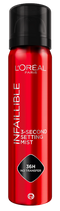
Our Infallible 3-Second Setting Mist delivers an ultra-fine spray that sets makeup in seconds while helping maintain a fresh, natural finish. The lightweight formula helps keep makeup in place while supporting long-lasting wear across different skin types.
Think about how you want your makeup to feel
Another key consideration in the setting spray vs setting powder debate? The finish they create. So, start by considering how you want your makeup to feel on the skin once it’s set.
Do you want your makeup to feel weightless and flexible on the skin?
If you’re aiming for a hydrated, glass-skin finish, setting spray is your match. Our Infallible 3-Second Setting Mist helps maintain a natural finish while delivering up to 36 hours of smudge-proof, waterproof, and transfer-resistant wear.
Do you prefer makeup that feels more set and controlled?
Setting powder delivers a buildable, airbrushed matte finish. Our True Match Cream Powder provides this in a compact, lightweight formula – blending seamlessly with skin texture while helping coverage remain even throughout the T-zone and under the eyes.
Consider your desired makeup look
When weighing up setting spray vs powder, the final factor to consider is how your makeup needs to look – and how hard it needs to work.
Because setting spray adds moisture back into your makeup, it creates a fresh, dewy finish. This makes it ideal for sweat-proof summer makeup and long-lasting everyday looks that still feel natural on your skin.
For makeup that needs to stay on all day, however – especially for occasions like weddings, where your bridal makeup needs to last – setting powder plays a bigger role. It helps lock coverage in place, control shine, and ensure makeup looks consistent under heat, humidity, and flash photography. Our Infallible Longwear Powder Foundation is designed for such moments – delivering longwear, mattifying coverage that’s resistant to sweat and water.
Now that you know how skin type influences the choice between setting spray vs powder, find the right foundation for your skin type, next.