Which Type of Foundation Is Suitable for Combination Skin?
No need to choose between hydrating and oil control.
No need to choose between hydrating and oil control.


Finding the perfect foundation for combination skin means choosing formulas that balance oil control in your T-zone with hydration for drier areas, creating a unified, natural-looking complexion without compromising either zone.
Combination skin presents a unique challenge: your forehead, nose, and chin produce excess oil while your cheeks feel dry or tight. Traditional foundations either leave your T-zone shiny or make your cheeks look cakey and flaky. The solution isn't choosing between hydration and oil control—it's finding the right foundation that addresses both concerns simultaneously.
Combination skin occurs when sebaceous glands produce different amounts of oil across your face, creating distinct zones with different needs and concerns.
The T-zone: Your forehead, nose, and chin contain a higher concentration of oil-producing glands. This area tends to look shiny, show enlarged pores, and experience occasional breakouts. The excess sebum can disrupt your skin's natural shedding process, potentially leading to clogged pores and blemishes.
The cheeks and outer face: These areas have fewer oil glands, making them prone to dryness, tightness, and sometimes flaking. Without adequate oil production, these zones can feel uncomfortable and show signs of dehydration.
Glossary: Non-comedogenic refers to products formulated to not clog pores, a crucial feature for preventing breakouts in oily zones while maintaining skin health in drier areas.
The ideal foundation for combination skin possesses specific characteristics that address both oiliness and dryness without exacerbating either condition.
Liquid foundations are your best bet for combination skin. They offer the versatility needed to balance different zones, providing buildable coverage that you can adjust based on each area's needs. The fluid consistency blends seamlessly into both oily and dry areas without emphasizing texture.
Avoid powder foundations: While tempting for oil control, powder formulas can settle into dry patches and emphasize texture, making dehydrated areas look worse.
Natural to satin finish provides the ideal balance for combination skin. This finish offers a subtle glow that looks healthy on dry areas while maintaining enough control to prevent T-zone shine from becoming excessive.
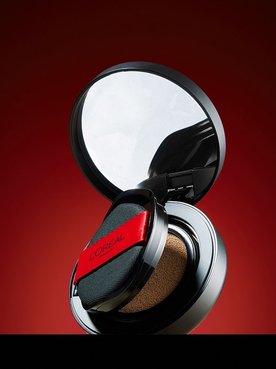
The L'Oréal Paris Infaillible Cushion Foundation exemplifies this balanced approach with its natural finish that adapts to combination skin's varying needs. The breathable formula provides up to 24 hours of flawless coverage without feeling heavy on oily areas or drying out your cheeks.
Understanding which ingredients benefit combination skin helps you select foundations that work with your skin rather than against it.
Niacinamide: Regulates sebum production in your T-zone (reducing oil by up to 30%) while strengthening the skin barrier in dry areas. It also minimizes pore appearance.
Hyaluronic acid: Provides hydration without adding oil. This means your dry areas get moisture while your T-zone stays balanced.
Oil-free formulas: Look for foundations labeled "oil-free" or "non-comedogenic." These won't add extra oil to your naturally oily T-zone while still providing adequate hydration through water-based ingredients.
Different foundation formats offer varying levels of success for combination skin. Here's how they compare.
|
Foundation Type |
Suitability |
Why It Works/Doesn't Work |
|
Liquid Foundation |
Excellent | Versatile, blendable, and available in various finishes; easily customizable for different face zones |
|
Cushion Foundation |
Excellent | Lightweight, buildable coverage; convenient for touch-ups; provides balanced hydration without heaviness |
|
Cream Foundation |
Good (with caution) | Can work if oil-free and lightweight; avoid heavy cream formulas that overwhelm oily zones |
|
Powder Foundation |
Poor | Can emphasize dry patches and settle into texture; often looks flat on combination skin |
|
Stick Foundation |
Moderate | Convenient for targeted application but can be too heavy for full-face use |
Proper application technique makes all the difference in how foundation performs on combination skin throughout the day.
Don't use the same primer all over your face. Apply a mattifying primer to your T-zone to control oil and minimize pores. Use a hydrating primer on your cheeks and any dry areas to smooth texture and add moisture. This dual-priming approach creates an optimal canvas where each zone gets exactly what it needs.
Use a damp beauty sponge. The bouncing motion helps foundation meld into skin naturally, and the dampness adds a subtle moisture boost that prevents dryness without making oily areas worse.
Application sequence:
Here's where technique becomes crucial. Don't powder your entire face uniformly.
T-zone: Apply translucent setting powder with a powder puff or dense brush. Focus on your forehead, nose, and chin—areas prone to breakthrough shine.
Cheeks and dry areas: Skip powder entirely, or use an extremely light dusting with a fluffy brush. Too much powder on dry areas causes cakiness and emphasizes texture.
Pro tip: If your cheeks need any setting, use a hydrating setting spray instead of powder.
The L'Oréal Paris Infaillible Cushion Foundation's portable compact makes midday touch-ups effortless. When breakthrough shine appears, blot your T-zone with oil-absorbing papers first, then gently pat fresh foundation only where needed.
These frequent errors can sabotage even the best foundation on combination skin.
Using the same moisturizer everywhere: Your T-zone and cheeks have different needs. Consider using a lightweight gel moisturizer on your T-zone and a richer cream on your cheeks before foundation application.
Skipping moisturizer on oily areas: Many people avoid moisturizing their T-zone, thinking it will reduce oil. This actually backfires—dehydrated skin overcompensates by producing more oil. Use an oil-free, lightweight moisturizer everywhere.
Applying too much foundation: Combination skin looks best with light to medium coverage. Heavy foundation application exaggerates the differences between zones. Start light and build only where necessary.
Not adjusting for seasons: Your combination skin's needs change with weather. Winter may require more hydration overall, while summer demands stronger oil control in the T-zone.
Ignoring skincare: Foundation performance directly reflects your underlying skin health. Establish a consistent skincare routine that addresses both oil control and hydration.
Matching foundation to your specific combination skin concerns ensures optimal results.
For acne-prone combination skin: Look for foundations with salicylic acid that won't clog pores. The lightweight, breathable nature of cushion foundations makes them particularly suitable since they won't suffocate skin or trap oil in pores.
For mature combination skin: Choose foundations with hydrating ingredients and light-reflecting particles. Avoid completely matte finishes that can settle into fine lines. A satin finish provides youthful radiance without emphasizing wrinkles.
For sensitive combination skin: Select fragrance-free, hypoallergenic formulas with soothing ingredients like centella asiatica or chamomile.
Best foundation type: Liquid foundations with natural to satin finishes work best for combination skin, offering the versatility to address both oily and dry zones.
Key ingredients: Look for niacinamide (oil regulation), hyaluronic acid (hydration), and oil-free, non-comedogenic formulas that won't clog pores.
Application strategy: Prime different zones with appropriate products, apply foundation with a damp sponge, and set only the T-zone with powder while leaving drier areas untouched.
L'Oréal Paris Infaillible Cushion Foundation: Ideal for combination skin with its breathable liquid formula, natural finish, and 24-hour wear that balances oil control and hydration without compromising either zone.
Avoid these mistakes: Don't skip moisturizer on oily areas, don't apply the same products uniformly, and don't over-apply foundation.
Pro tip: Always prep skin properly with appropriate skincare before foundation application. The right moisturizers and primers for each zone dramatically improve foundation performance and longevity.
This article incorporates information from the following sources:
Article written in collaboration with dermatological experts specializing in sebaceous gland function and combination skin care.